Capodanno is the Italian word for New Year’s Day. Italians throughout the peninsula and beyond celebrate New Year as the clock strikes midnight on December 31.
This celebration is more than just a worldwide countdown. It is full of symbolism, superstition, and lavish feasts. It includes folk customs, medieval calendar reforms, and ancient Roman rites.
But where did Capodanno come from? Using Italy’s rich cultural legacy, let’s take a look at its linguistic origins and customs that have developed over millennia.
The Story of Capodanno
1. Where Does Italian New Year Come From?
There is no precise first attestation of Capodanno in Italian texts. It likely emerged in the 13th–14th centuries during the rise of Tuscan Italian.
You can understand the roots of Capodanno from the word itself. Originating from the Italian expression capo d’anno, it literally means “head of the year.” The “head” motif represents rebirth and leadership in the calendar cycle.
More specifically, it is a compound of the following words:
- capo (from Latin caput, meaning “head”, metaphorically meaning “beginning, chief, source”, or “top” (e.g., as in “capital” in English, or capitulum for “chapter”). This usage extended to temporal concepts, where the “head” represented the start of a sequence.
- d’anno (short for “di anno,” meaning “of the year”, from the Latin annus (year)). The word annus itself has Proto-Indo-European roots, related to concepts of time cycles or “going” (as in annual recurrence).
In Proto-Indo-European, time concepts often used body metaphors (e.g. “foot” for base), making caput (head) a natural extension for “top/start”.
Ancient societies saw time as a cycle with a distinct beginning point. This is reflected in the metaphor of the “head” denoting the beginning of something. It parallels Hebrew rosh hashanah (head of the year), the Jewish New Year celebrated in September/October, which influenced some Latin usages via Byzantine or Eastern Christian traditions.

How Did This Happen?
As mentioned, you can trace Capodanno‘s linguistic roots back to the Late Latin phrase caput anni (head of the year). This phrase was used to mark the start of the year in medieval writings. As early Italian developed from Vulgar Latin by the 14th century, the phrase became a single word that was used in literature and historical records.
This happened through a process called univerbation, common in Romance languages, where prepositional phrases solidify into nouns.
The pronunciation in modern Italian is /ka.poˈdan.no/, with stress on the third syllable. Plurals are rare, but include capodanni or capi d’anno.
It’s interesting to note that while standard Italian firmly links Capodanno to January 1, variations like cabudanni or capudanni in some Italian dialects, such as Sardinian, once referred to September as the start of the year. This was due to Byzantine influences. Some other areas used March 25 (Annunciation), or December 25 (Christmas).
2. How Was Capodanno Established in Italy?
The calendar underwent major changes in ancient Rome, which is where the celebration of Capodanno on January 1 originated.
Originally, the Roman year began on March 1, aligning with the agricultural cycle and spring’s renewal. However, for administrative reasons, including the consuls’ inauguration, the start date was moved to January in 153 BCE.
In 46 BCE, Julius Caesar established the Julian calendar, making January 1 the official start of the new year. This fixed caput anni to January.
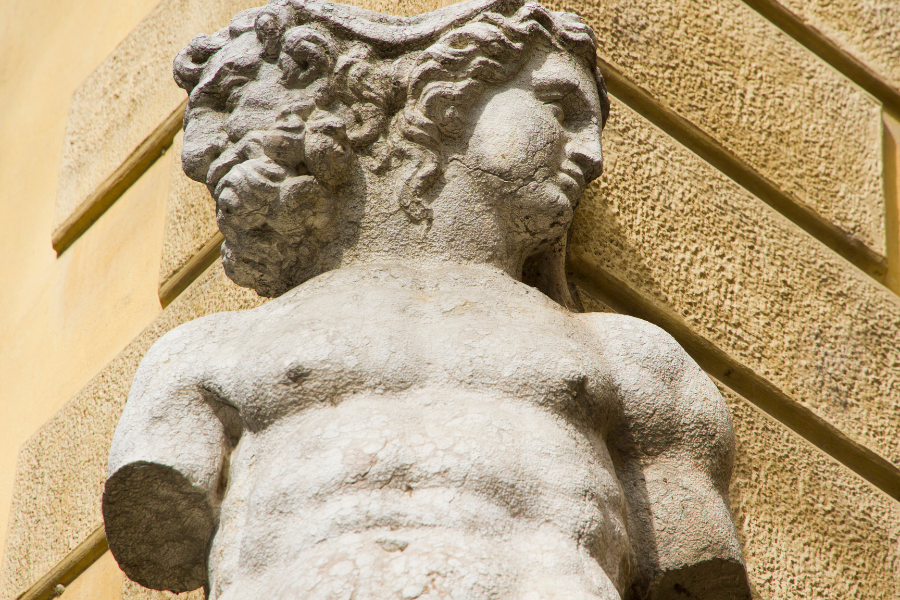
The month’s name, January, comes from Janus (Ianus in Latin, Giano in Italian). He was the two-faced god of beginnings, endings, gates, and transitions. He symbolized looking back at the old year and forward to the new one.
On this day, the Romans honored Janus with offerings, feasts, and public celebrations. They thought that his dual gaze could bring prosperity and ward off bad luck. To represent sweetness and prosperity in the upcoming year, they exchanged gifts (strenae). Strenae were little presents like figs, dates, honey, or coins.
Making noise to ward off evil spirits was part of these pagan rituals. This practice is still present in modern fireworks.
3. How Did Christianity Influence Capodanno?
The Roman customs merged with religious aspects as Christianity expanded throughout the Roman Empire.
Italians also call New Year’s Eve La Festa di San Silvestro, after Pope Sylvester I, who died on December 31, 335 CE. He is credited in legend with baptizing Emperor Constantine and slaying a dragon. This reinforced the themes of renewal and triumph over evil.
Over time, pagan rituals merged with Christian elements, and by the medieval period January 1 became fixed across Europe. Especially with Pope Gregory XIII’s 1582 calendar reform. This reform combined Roman paganism and Christian tradition to further solidify January 1 throughout Catholic Europe by the Middle Ages.
You can also find the expression caput anni in medieval Latin texts, frequently in legal or religious contexts:
- The 17th-century legal glossaries define caput anni as “the beginning of the year”, such as Spelman’s Glossarium Archaiologicum, associating it with administrative actions, like debt settlements. The “new year” varied by region throughout the Middle Ages due to Europe’s fragmented calendar systems.
- In Christian liturgy, the term in caput anni (literally “at the head of the year”) referred to January 1. This date in the Jewish tradition coincided with the Feast of the Circumcision of Christ. It echoed themes of penitence and time’s renewal.
- Caput anni is used in idiomatic ways in historical documents, such as the Welsh-Latin Historia Brittonum (History of the Britons) from the 9th century. These documents sometimes Latinized vernacular expressions for the end or beginning of the year, demonstrating its flexibility.

The word’s origin is inseparable from the history of the calendar, which determined what constituted the “head of the year”. Capodanno was able to unify Italian celebrations, though, because the Gregorian reform standardized January 1. It also extended to New Year’s Eve (vigilia di Capodanno) and celebrations.
The tradition of Capodanno developed among Italy’s city-states during the Renaissance and later periods. Influences from nearby cultures, such as the Spanish custom of eating grapes in Naples, enhanced the celebrations.
4. What Are The Customs Surrounding Capodanno in Italy?
Through colorful traditions that combine superstition, food, and spectacle, today’s Capodanno in Italy maintains these roots.
The common Italian traditions include:
- The Cenone di Capodanno: A nod to Roman strenae, the cenone di Capodanno is a lavish New Year’s Eve dinner symbolizing abundance. Traditional dishes include:
- Lentils (lenticchie): Eaten at midnight because their coin-like shape represents wealth. This stems from Roman custom of gifting a purse (scarsella) of lentils, hoping they’d turn into gold coins.
- Cotechino or zampone (pork sausage or stuffed pig’s trotter): Fatty pork symbolizes prosperity and progress, because pigs “root forward”, into the future. It is served with lentils.

- The most common Italian superstitions involve:
- Wearing red underwear (intimo rosso): A widespread superstition for luck, love, fertility, and protection. It must be new, often gifted, and sometimes discarded afterward. Roots trace to ancient Rome (around 31 BCE under Octavian Augustus), when red symbolized power, vitality, and prosperity. Both men and women wore red garments. Nonetheless, some accounts point to Chinese influence on this custom during the Middle Ages via trade routes.
- Fireworks and noise: In cities like Rome (e.g. Rome’s Colosseum) and Venice (e.g. Venice’s lagoon), fireworks illuminate the sky, carrying on the Roman custom of using loud noises and fire to frighten evil spirits.
- Throwing out old things: Once common, especially in Naples, tossing pots, furniture, or objects from windows to symbolize letting go of the past. Now rarer for safety, but echoes Roman renewal rituals.
- Eating specific food and drinking wine: Pomegranate seeds for abundance, grapes in some regions (like 12 at midnight from Spanish influence), panettone/pandoro for dessert, and toasting with prosecco or spumante.
Proverbs like “Chiara notte di Capodanno, dà slancio a un buon anno” (“Clear New Year’s night gives momentum to a good year”) show its folkloric depth, and “Natale con i tuoi, Capodanno con chi vuoi” (“Christmas with family, New Year with whomever you want”) highlight a shift toward social flexibility in New Year’s celebration.
5. Conclusion: New Year Celebrations in Italy
As we saw, while the celebration of January 1 has Roman roots honoring Janus, god of beginnings, the word itself is a Late Latin construction that entered Italian.
Capodanno is a celebration of hope and fresh starts. It’s a living link to Italy’s past, where Roman gods, calendar inventors, and folklore come together.
The “head of the year” begins on a prosperous note as Italians honor centuries of tradition by sharing hugs and toasting with prosecco at midnight.

Capodanno reminds us that every conclusion is a doorway to something new, whether you’re in a comfortable family home or Piazza San Marco. Buon Anno!
This article was all about Italian Capodanno, its meaning, and origin.
Hungry for more Italian culture and language? Explore our articles on Ferragosto, vacanze and ferie, or Italian language learning for further linguistic adventures!